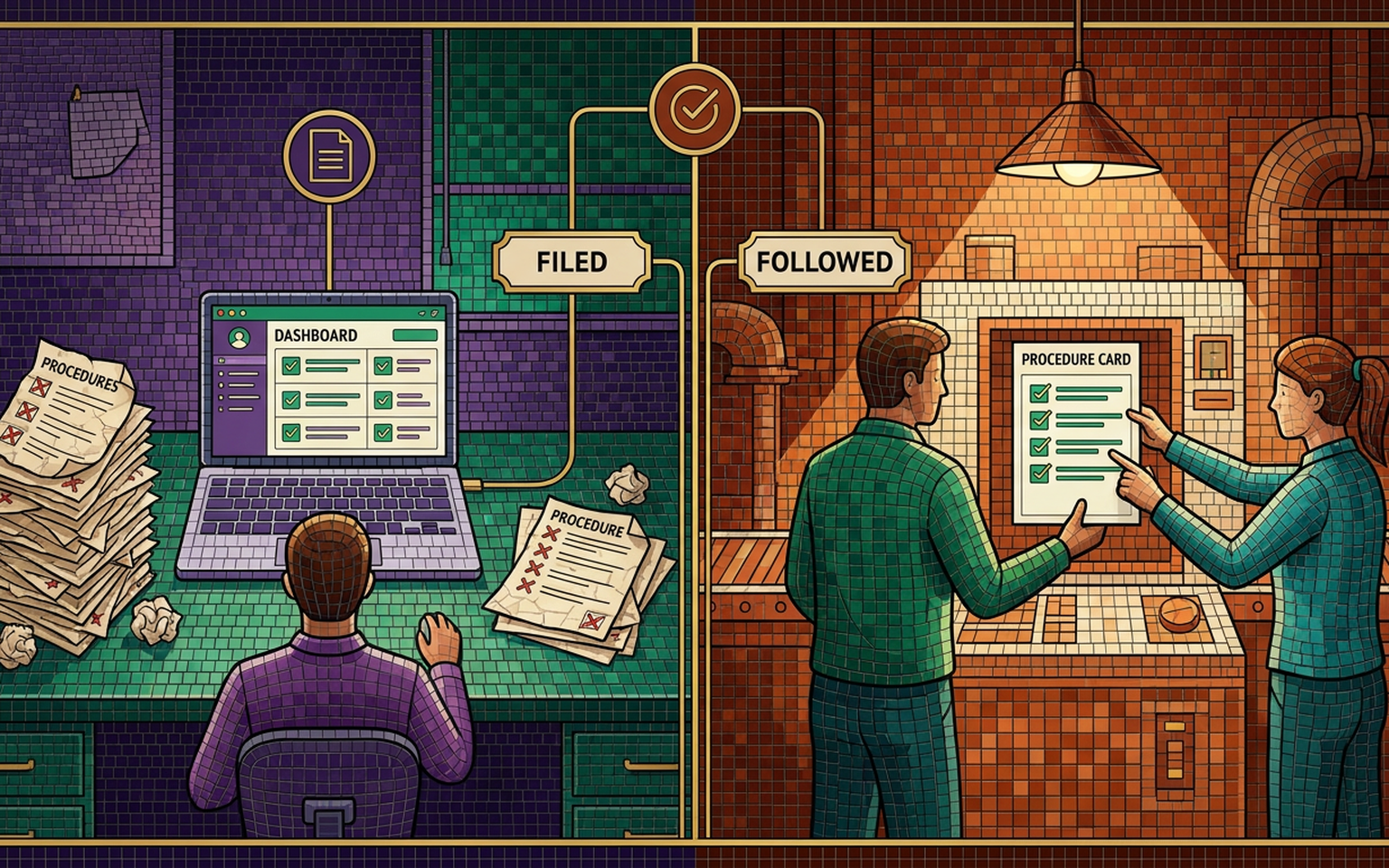
I've sat on both sides of this purchase. As CFO of a manufacturing company, I approved a documentation platform with a clear promise attached: our procedures would finally be organized. They were. They were also, for the most part, the same procedures, now wrapped in version numbers and approval workflows. The software did what software does well, and it didn't write a single sentence.
Will SOP software fix a documentation problem?
Software fixes storage, access, and version control. It can't fix a procedure that's unclear, out of date, or wrong, because it has no way to know. If your problem is that nobody can find the current document, software helps. If your problem is that the document doesn't match the work, software only makes the mismatch easier to see.
"Our documentation is a mess" describes two different problems, and they need different purchases. One is a finding problem: three versions of the receiving procedure on a shared drive, and nobody sure which one is current. The other is a writing problem: the current version describes a process nobody actually follows.
After our rollout, I pulled up the receiving inspection procedure on the new platform. It showed as approved, current, owned, and reviewed on schedule. On the dock, the inspector had been working a different sequence for years, because step three called for a gauge that had been moved to another building. The dashboard was green. The procedure was wrong. Nothing in the software could have told us, and that gap is the one most buyers don't see coming.
What does SOP software actually do well?
It gives every document one home, a version history, a named owner, a review date, and a record of who has read what. For a company with hundreds of procedures or several sites, that's real value. It replaces the shared drive and the binder, and it turns an auditor's request for the current revision into a thirty-second answer.
That's worth paying for when the volume justifies it. Approval routing means a change can't go live without the right signatures. Review reminders mean a procedure doesn't sit untouched for four years. Read-and-sign tracking gives you a record, which matters the day an incident report asks who was trained on what.
Be honest about scale, though. The controls themselves are simple: a version, an owner, an effective date, and one official location. A small team with fifty documents and some discipline can run all four on a shared folder and a spreadsheet. Software automates the discipline. It doesn't create it, and a company that never kept the shared folder tidy rarely keeps the platform tidy either.
What won't SOP software do?
It won't interview your best operator, watch the work, find the steps people skip, decide what belongs in the procedure, or write sentences a tired person can follow at the machine. Those are writing and design tasks. Every platform assumes someone has already done them, and the blank template is where most projects stall.
Here's the pattern I've watched more than once. A company buys a platform, imports three hundred Word files, and celebrates the migration at the end of the quarter. Six months later the same documents confuse the same people, now in a nicer interface. The import carried the old problems across intact, with new metadata on top.
The blank template is the harder part. It assigns authorship, usually to the person who knows the process best, with a due date attached. That person is often the worst choice to write it, because expertise hides the steps they no longer notice themselves performing. The software has no opinion about that. It just shows the task as overdue.
Many platforms now offer generated drafts from a screen recording or a voice walkthrough. I'd treat those as raw material. They give you a tidy record of what one person did on one afternoon, workaround included. Someone still has to decide what the standard is, and that decision is the real work of writing a procedure. Features differ by vendor, so ask for a demonstration on one of your own procedures before you believe any of it.
When should you buy software, and when should you write first?
Write first when your existing documents are unreliable, because migrating them moves the problem to a new address. Buy first when the documents are sound but scattered, or when multiple sites and an audit schedule make manual control the bottleneck. Most companies are in the first group and believe they're in the second.
There's a simple test. Pick five procedures at random and send someone who didn't write them to follow each one on the real equipment, step by step. If three or more break down, you have a writing problem, and no platform will change the result. Will your SOPs hold up to an audit? covers what that walk-through usually turns up.
The objection I hear next is fair: "We can't rewrite everything before we buy." You don't have to. Rewrite the twenty procedures that carry the most risk, meaning safety-critical, quality-critical, and anything a regulator reads. Migrate the rest as they are, tagged unverified, and fix them in order as they're used. The sequence matters more than the total. A rule I held at the plant was that nothing entered the system until someone had walked it on the floor. It slowed the launch by a month and kept us from filing our own errors in a very organized way.
How do the costs compare?
Software is a recurring subscription, usually priced by user count or site, with setup and migration often billed separately. Writing is a project cost, scoped to the number and complexity of procedures. They're different kinds of spend, and skipping the writing doesn't remove its cost. It moves it into staff hours later.
I won't quote software prices, because they vary too much by vendor and company size. Get written quotes, and ask specifically what implementation and migration cost, since that's where the surprises sit. On the writing side, what it costs to document your processes lays out the market ranges and the factors that move them. My own work is technical writing, scoped to what you have and quoted after a discovery call.
The most expensive version of this I've seen is paying for both and using neither: a platform full of unverified imports, and a staff that still keeps the real instructions in a notebook by the machine.
What should you ask a vendor before you sign?
Ask them to load three of your own procedures during the demo, not theirs. Ask what happens to your documents if you leave, who controls the export, and what the platform does when a procedure and the actual work disagree. The answers tell you if you're buying a filing system or a process.
A short list I'd bring to the demo:
- Can I export every document in an editable format, with history, without a fee?
- When a review date passes and nobody responds, who's alerted next?
- Does read-and-sign confirm understanding, or just a click?
- What's the plan when the author of a procedure leaves the company?
The honest vendors answer those without flinching. The rest change the subject to features.
If you're weighing a platform and want a second opinion on what you'd be moving into it, read the FAQ or book a discovery call. I'll tell you plainly if you need a writer, a platform, or both, and in what order.
Software is a good place to keep a good procedure. It's a poor place to find out you don't have one.
Frequently asked questions
Will SOP software write my procedures for me?
No. Software stores, routes, and tracks documents. Some platforms offer draft generation from recordings, but those drafts capture what one person did once, including workarounds. A person still has to decide what the standard is and write it so someone can follow it at the machine.
Do I need SOP software for a small company?
Often not. The core controls are a version, an owner, an effective date, and one official location, and a small team with a few dozen documents can run them on a shared folder and a spreadsheet. Software starts to pay off with hundreds of documents, several sites, or a heavy audit schedule.
Should I write my SOPs before or after buying software?
Write first if your existing procedures are unreliable, since migrating them only moves the problem. Buy first if the documents are accurate but scattered. A quick test is to have someone who did not write five procedures follow them on the real equipment. If three or more break down, write first.
What should I ask an SOP software vendor before signing?
Ask them to load three of your own procedures in the demo, whether you can export every document in an editable format with history, who is alerted when a review date passes unanswered, and what happens to your documents if you leave the platform.